Our Process
The remodeling process, week by week
You should always know which week you are in: four stages, a dated schedule, and one person who answers the phone. Nothing here is unusual — it is just written down, which turns out to be the part most projects skip.
The four stages
From first call to final walkthrough
-
Walkthrough
About an hour at your house. We measure, look behind the walls where it matters, and talk through what you actually want. No charge and no deposit.
-
Written scope
A line-by-line document naming the cabinet line, the tile, the counter material and the electrical work, with a fixed price and a dated schedule.
-
Permit and build
We file with Lee or Collier County, order long-lead items before demolition, and run the trades in sequence under one project lead.
-
Punch list
We walk it with you, write down everything that is not right, and fix all of it before we ask for the final payment.
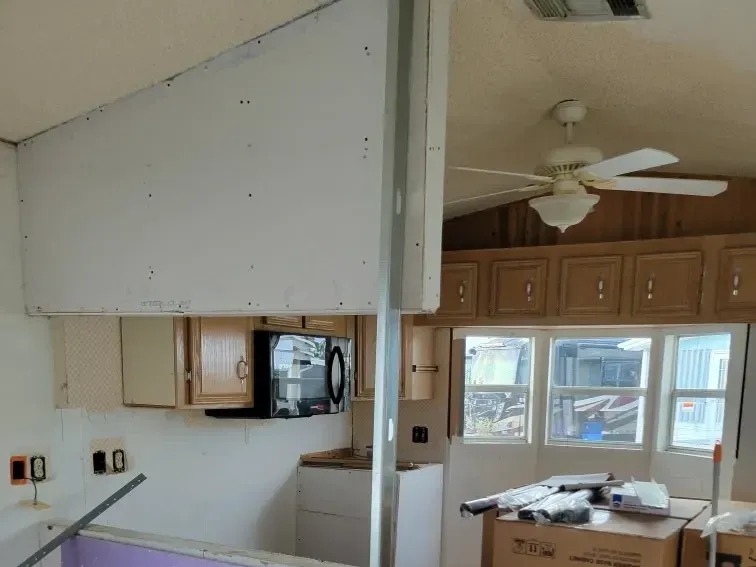
Why the inspection hole matters.
At the walkthrough we will often cut a small hole in a wall you want removed — the most common ask in kitchen remodeling here. It takes ten minutes and we patch it before we leave.
What it tells us is whether that wall is carrying roof load, which is the difference between a straightforward opening and an engineered beam with a permit. Knowing that before you get a price is the whole point.
- Included
- Cut and patched at the walkthrough, no charge
- Included
- Answers a question that otherwise surfaces mid-demolition
- Included
- Lets the structural cost sit in the original number
Change orders, and why we insist on them.
On a house built before 1985 we usually find something: rot behind tile, a wall that is structural, wiring that will not pass. It is not a failure of the estimate, it is the nature of opening up an old building.
What we do about it is fixed. We stop, photograph it, price it, and send you a written change order. Nothing continues on that item until you sign. You will never see a line on an invoice you did not approve first.
- Included
- Photographed and priced before any work continues
- Included
- Signed by you before the trade goes back on that item
- Included
- No verbal add-ons, ever
What we most commonly find, and roughly how often
Rot behind bathroom tile shows up on roughly a third of the bathrooms we open, and considerably more in houses built before 1985 where the shower pan was a mortar bed with no membrane.
Walls that turn out to be structural are the second most common. In slab-on-grade ranches the wall between kitchen and living room frequently carries roof load, which is why we check it at the walkthrough rather than during demolition.
Electrical that will not pass current inspection is close to universal in kitchens from before the mid-1990s: too few circuits, no GFCI at counter level, and sometimes aluminum branch wiring that needs proper pigtailing. It is inexpensive to correct while the walls are open and expensive afterward, so we put it in the original kitchen scope rather than treating it as a discovery.
Start with the walkthrough.
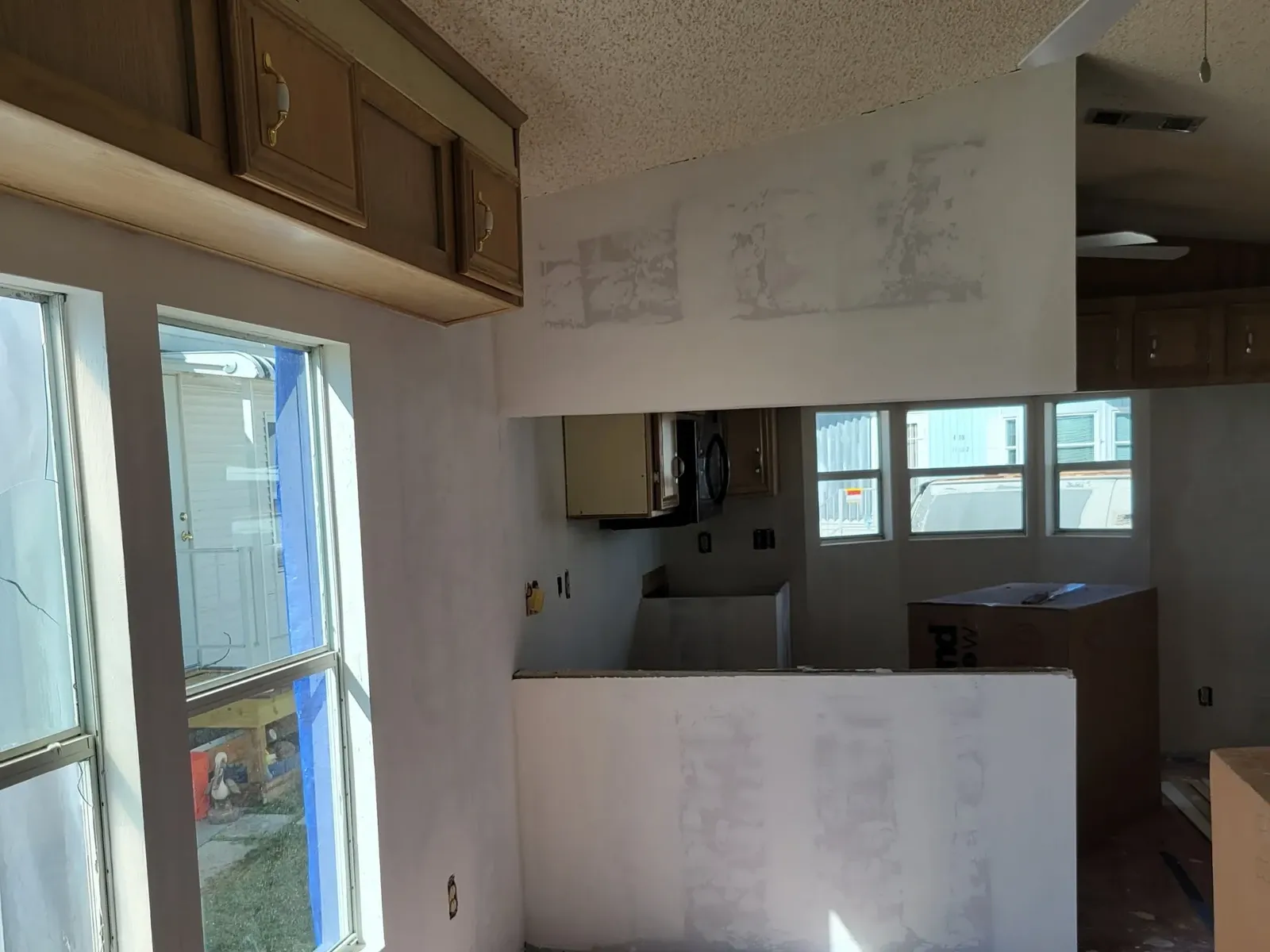
An hour of our time, no charge, and you will know more about your house than when we arrived.
Questions about how we work
Do you charge for the estimate?
No. The walkthrough and the written scope are free, and we do not ask for a deposit to produce one. We ask for a deposit when you sign the scope and we start ordering materials.
How do payments work?
A deposit at signing to cover long-lead materials, then progress payments tied to milestones in the written schedule, then a final payment after the punch list is complete and you have signed it off. Never a large payment for work not yet done.
Who is on site day to day?
Your project lead plus whichever trade is working that stage. The lead is the person who did your walkthrough and wrote your scope, and they are reachable by phone during the build. Meet the company on our about page.
What if I want to change something mid-project?
Often possible, and it goes through the same change order process: we price it, you sign it, then it happens. Changes after a material is ordered or a trade is booked cost more, so earlier is always cheaper.